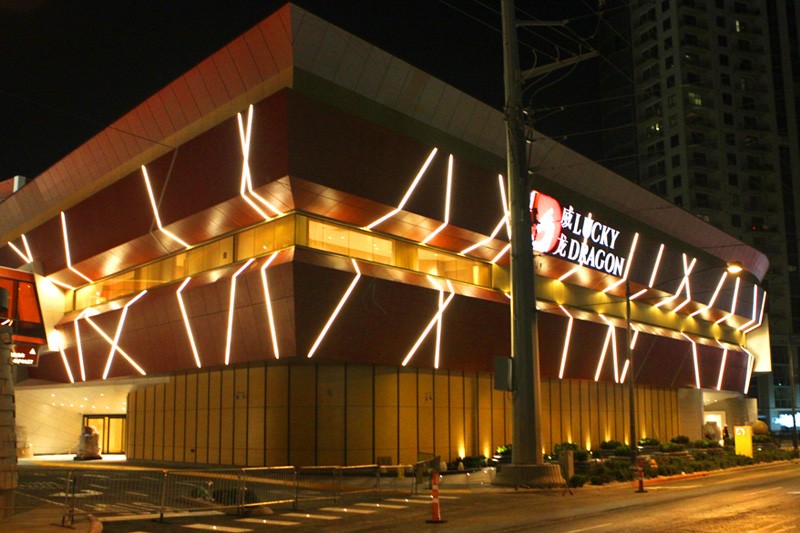
Design Elements of Lucky Dragon
Explore the unique architectural design of the Lucky Dragon.
- Feng Shui principles
- Dragon chandelier centerpiece
- Pan-Asian decor
- Cultural authenticity
The Lucky Dragon Casino was a boutique hotel and casino located on the northern end of the Las Vegas Strip, dedicated to creating an authentic Asian cultural and gaming experience. Despite its ambitious vision to appeal to Asian clientele, the casino faced financial struggles leading to its closure shortly after opening.
The Lucky Dragon Casino represented an ambitious attempt to create an authentic Asian cultural and gaming experience in Las Vegas. Opened in December 2016, it was the first casino built from the ground up in Las Vegas since the Great Recession, marking a significant development for the city's hospitality industry. The boutique hotel-casino was strategically designed to appeal to Asian tourists and locals seeking an authentic Pan-Asian experience, distinguishing itself from the massive mega-resorts that dominate the Strip. However, despite its innovative positioning and carefully curated amenities, the Lucky Dragon's story became one of the fastest and most dramatic failures in modern Las Vegas casino history.
The Lucky Dragon Casino emerged after a six-year drought in new casino construction in Las Vegas, with the Cosmopolitan being the last ground-up casino built in 2010. The project took five years to develop from concept to completion, representing a significant investment in the city's north Strip location near Sahara Avenue. The casino was backed by prominent investors including Las Vegas developer Andrew Fonfa and former Las Vegas Sands Corporation President Bill Weidner, alongside 179 individuals who participated in the federal Immigrant Investor Program, each investing $500,000 for a total of $89 million.
The design philosophy behind Lucky Dragon deliberately departed from typical Las Vegas spectacle. As Dave Jacoby, the Chief Operating Officer, explained: "We didn't want to be a caricature of an Asian resort. Most of the other casinos here in Las Vegas are very large mega resorts trying to be all things to all people -- we have a different approach here at Lucky Dragon." Every design element reflected this commitment to authenticity, from bilingual signage with Chinese as the primary language to feng shui principles integrated throughout the property.
Located at 300 W. Sahara Avenue between the Bonanza Gift Shop and Golden Steer Steakhouse, the Lucky Dragon occupied approximately three acres—a modest footprint compared to Caesars Palace's 34 acres. Despite its compact size, the resort featured comprehensive amenities tailored to its target demographic:
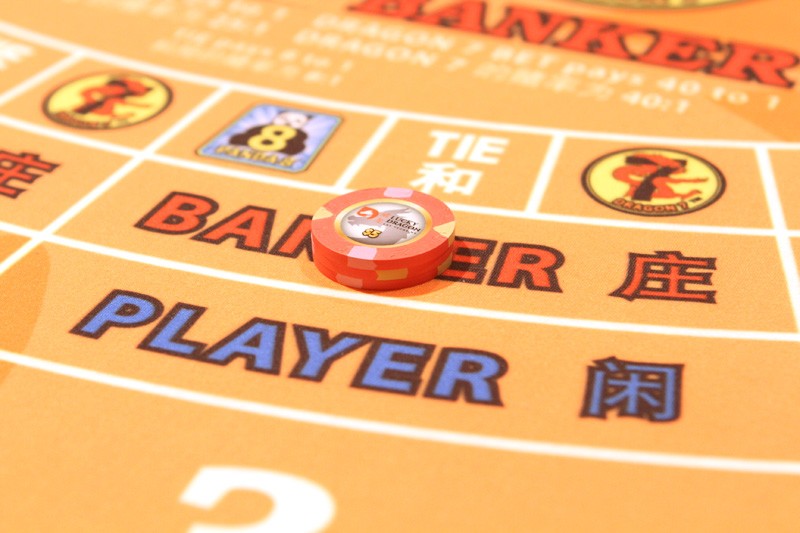
Gaming Floor: The casino housed nearly 300 slot machines and more than 30 table games, with a particular emphasis on baccarat tables popular among Asian gamblers.
Accommodations: The property included 203 hotel rooms across a nine-story tower.
Architectural Centerpiece: The most striking feature was a quarter-ton dragon chandelier—a glass sculpture standing 23 feet tall with 288 glass orbs that required 800 people to create. This stunning centerpiece served as the visual anchor of the casino floor.
Design Elements: The property incorporated Asian Art Deco design principles throughout, featuring auspicious symbols and colors invoking wealth and well-being in Chinese culture, including coins, dragons, bats, clouds, goldfish, and phoenixes. All signage was ADA compliant and presented in both Chinese and English languages, with original Chinese calligraphy commissioned for premium gaming areas like the Emerald Room high-limit gaming section.
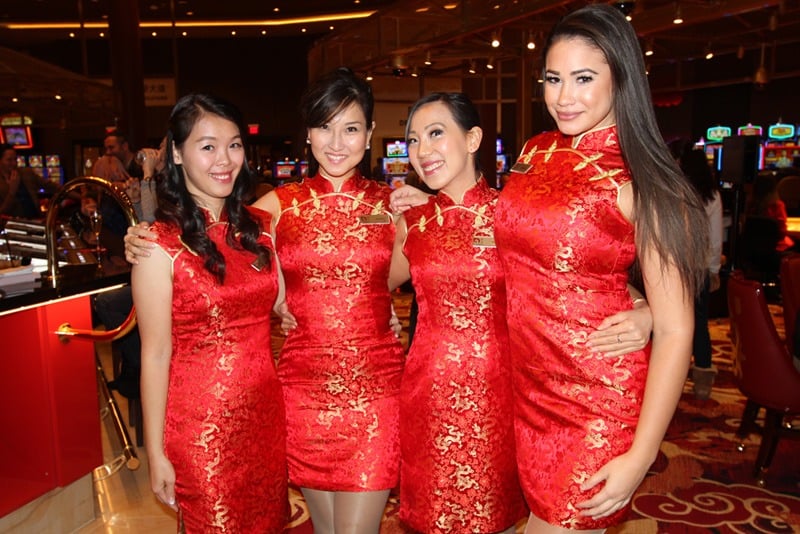
Dining and Services: The resort offered Pan-Asian cuisine and maintained a multilingual staff to serve its intended audience authentically.
Parking: Free parking was available, a practical amenity for attracting local clientele.
The Lucky Dragon's troubles began almost immediately after its November 2016 soft opening and December 2016 grand opening celebration during Chinese New Year. Despite the initial fanfare and parade, the excitement and crowds quickly dissipated. The casino struggled to draw substantial visitor traffic and never achieved the operational success its backers envisioned.
Several operational issues contributed to its decline. Guests complained that the rewards system lacked generosity compared to competing casinos, particularly those already established in serving Asian markets like Palace Station and Gold Coast. Additionally, the gaming floor fell short of expectations—visitors noted there were insufficient baccarat tables and no craps tables, limiting appeal to diverse gaming preferences. The casino's niche positioning, intended as a strength, became a limitation as it failed to compete with established competitors already loyal to existing casinos with more extensive gaming options.
The Lucky Dragon Casino's closure serves as a case study in the challenges faced by niche market casinos in Las Vegas.
The casino's strategic miscalculations and financial struggles highlight the competitive dynamics of the gambling industry, where customer loyalty and comprehensive offerings are key.
The timeline of Lucky Dragon's demise compressed into a remarkably short period:
The bankruptcy filing revealed substantial debt obligations. Beyond the $89 million owed to 179 EB-5 immigrant investor program participants, the casino owed Snow Covered Capital more than $50 million. This debt structure left little room for operational recovery.
Sale and Valuation: The property was subsequently scheduled for foreclosure auction. Built at a cost of $165 million, the Lucky Dragon was listed with an asking price of only $56 million—a dramatic 66% discount that reflected the property's troubled history and uncertain future.
The Lucky Dragon occupied a unique but ultimately untenable position in the Las Vegas casino landscape. Its deliberate targeting of Asian tourists and locals represented a calculated niche strategy, contrasting sharply with mega-resorts attempting to appeal to all demographics. The property was designed to compete with established Asian-friendly casinos like Palace Station and Gold Coast by offering authenticity and cultural specificity rather than scale.
However, this positioning proved to be a critical strategic vulnerability. Existing casinos had already cultivated loyal customer bases among Asian gamblers over decades of operation. The Lucky Dragon's authenticity, while admirable in design execution, could not overcome the established loyalty and rewards programs of competitors with deeper pockets and more extensive gaming options. The casino's modest size and limited gaming variety, acceptable for a cultural experience center, proved insufficient for serious gamblers seeking comprehensive gaming amenities.
The Lucky Dragon's collapse achieved notoriety as one of the fastest casino failures in modern Las Vegas history. David Schwartz, director of UNLV's Center for Gaming Research, noted that while the Moulin Rouge and Royal Nevada both opened and closed within several months in 1955, he "couldn't recall any other resorts after the mid-1950s that shut down within a year or two of opening." This placed the Lucky Dragon's 14-month operational lifespan among the most dramatic failures in decades, exceeded only by casinos operating during the Great Depression era.
The failure demonstrated that even well-capitalized projects with professional management and sophisticated design cannot overcome fundamental market realities. The casino industry's consolidation and the loyalty dynamics among established players created barriers to entry that purely design-driven differentiation could not penetrate. The Lucky Dragon's closure suggested that new casino ventures in Las Vegas required either massive scale to compete across all demographics or acceptance that niche positioning alone, without competitive gaming advantages and rewards structures, could not sustain operations.
The incident also highlighted risks associated with the EB-5 immigrant investor program, which became a cautionary tale for future foreign investment in speculative hospitality ventures. The loss of $89 million from 179 individual investors represented significant personal financial losses and damaged confidence in the program's viability for casino projects.
The Lucky Dragon Casino's journey from ambitious vision to market failure encapsulates the challenges facing innovation in Las Vegas's mature gaming market. Opened in December 2016 as the first ground-up casino construction in six years, it represented both optimism about the city's recovery and a bold attempt to serve an underserved demographic through authentic cultural positioning. The property's architectural excellence—from its iconic dragon chandelier to its carefully considered feng shui design elements—demonstrated genuine commitment to its stated mission.
However, the casino's 14-month operational lifespan before complete closure illustrated that design authenticity and cultural specificity cannot substitute for competitive gaming offerings, generous rewards systems, and the established loyalty commanding competing casinos possess. The property's $89 million in EB-5 investor losses and $200,000 monthly operating deficits created an unsustainable financial structure that no amount of cultural authenticity could overcome.
The Lucky Dragon's failure provided several lessons for the Las Vegas market. First, niche positioning must be paired with comprehensive competitive gaming amenities and rewards competitiveness to attract and retain customers. Second, new entrants in mature gaming markets face substantial disadvantages against established competitors regardless of superior design or authenticity. Third, EB-5 investment structures in speculative casino ventures carry substantial risks that regulatory oversight may not adequately address. The property's eventual sale at a 66% discount from construction cost reflected the market's valuation of its troubled history and uncertain operational future under any ownership.
Ultimately, the Lucky Dragon represents a cautionary tale about the limitations of niche positioning and design excellence when confronted with the operational and financial realities of contemporary Las Vegas casino economics.
Supporting partners who helped bring the vision of Lucky Dragon to life.


Explore the unique architectural design of the Lucky Dragon.
Analyze the financial missteps that led to the casino's downfall.
Discover how boutique casinos are making a comeback with new strategies.
An in-depth look at current trends in the Asian gambling market.
Learn about the latest architectural designs making waves in the casino industry.